
Toccoa
'W' Company, in September of 1942, was a tent city on the grassy slope of a hill just below the regimental medical processing facility. The squad tents, as brand new as the citizen soldiers who occupied them, were aligned to form a company street, but W Company was a company in name only. It served as the regiment's in-and-out processing machine, and it was a fast train in both directions. The incoming volunteers (mostly draftees, some enlistees, but all volunteers for parachute training) were frantically busy from morning to night…drawing clothing and equipment, filling out forms, falling in for meals, marching to examinations, etc. The train was moving much too fast to jump from it and there was never, to my knowledge, a single disciplinary action among the thousand of "in-processes".
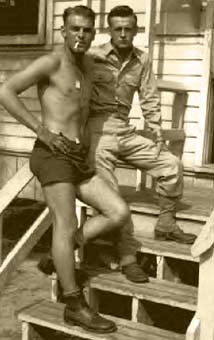
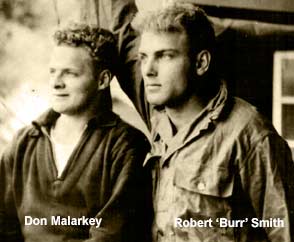
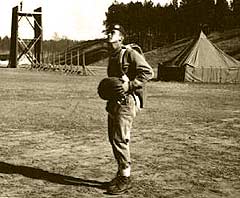
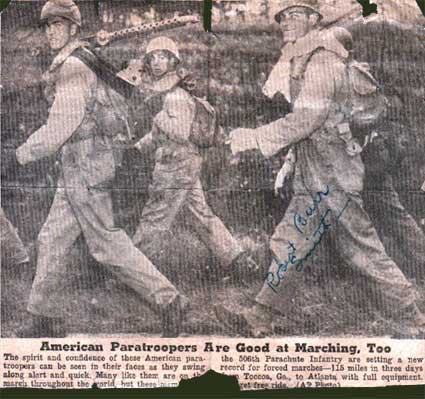
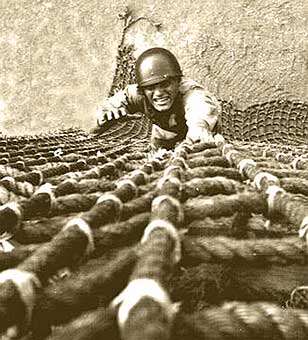
In his jump journal kept during training, Burr spoke of his first jump and his feelings about their parachute training.
“December 21, 1942: Made my first parachute
jump, an experience I’ll never forget! Awfully scared, but so was
everybody else so I didn’t feel so bad. The sensation of falling
through space is indescribable. Just like a dream. The opening shock was
slight, but I hit the ground like a ton of bricks!
December 22, 1942: Living on my nerves -
how long can I do it? Parachute jumping is terribly exciting, but I can
honestly say that I don’t enjoy it. It’s fun after the canopy
opens, but that fun doesn’t overshadow the fear that seizes me as
I go out the door. Lots of the boys thrive on it, but I’m too damned
excitable. I may grow to enjoy it later on, but only time will tell.
December 23,
1942: …Two jumps to go to those glorious wings!
December 24, 1942: Made my final qualifying jump today - I’m
now a qualified parachutist! The jump itself was the best I’ve made
so far, just a slight opening shock and a very soft landing. My other
landings were so hard because I was making my downward pull too soon.
One of the men from G Company had a horrible accident today-his right
hand got tangled in his suspension lines and pulled off three fingers.
He took his agony like a man though - didn’t whimper or cry - will
I be that brave when I get mine? A man from Headquarters Company froze
in the door (just two men ahead of me) but my buddy Skipper Muck kicked
him out the door – cruel treatment, but a scared jumper can cause
the death of a whole stick if he freezes in the door when we got into
action.
July 28, 1943: 12 jumps to date – expect to leave for combat soon.”
Recollections differ as to which platoon Burr was assigned to but he ultimately ended up in the first platoon. In the four months prior to D-Day, he was assigned to company headquarters and was a jumpmaster at Chilton Foliat. On D-Day, he was fortunately removed from Lt. Thomas Meehan's plane just seconds before the planes took off, along with Joe Hogan, and moved to another stick, thereby saving his life. All of his good buddies were of course lost on that night.
From his writings:
“Just a few seconds before take-off (in England), Joe “Red” Hogan and I were taken from the company headquarters aircraft (against our violent protests) and put in the next plane on line. We were the only survivors from the company headquarters section – all other being killed when their aircraft exploded from a direct hit while crossing the French coast. After the reorganization of the company on “D-Day” night, I became acting operations sergeant and Sgt. Diel became acting first sergeant. I performed those duties until wounded on 13 June during the attack on Carentan. On D-day, gathered a small group of stragglers and moved towards
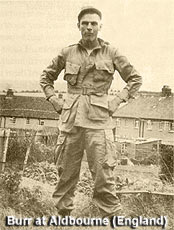
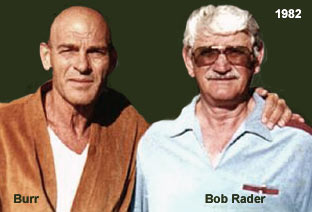
designated drop zone. Bob Rader (r) was one of these. Found Frank Perconte injured in the jump. Engaged in a minor firefight with “White Russians” near St. Come-au-Mont. Disengaged and continued to press on toward Vierville. At dawn joined company-just before the raid of the 88’s – in which I did not participate…”
Burr was wounded twice in WWII, once by shrapnel on D-day plus 7 at Carentan as mentioned above, and another time in the attack on Foy on January 13, 1945, earning him two purple hearts. After a stay in the hospital, he rejoined Easy Company prior to the end of the war.

Most
of the pictures on
this website were taken by Peter van de Wal. I assert the moral right to be
recognized as the photographer and the owner of these images in any form.
If you wish to use these photos for noncommercial purposes I consent to such
use as long as the source of the photos is clearly acknowledged in the same
publication as the photos you wish to reproduce.
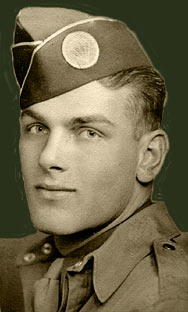
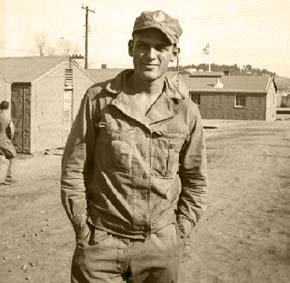
Photos portraying Burr Smith are courtesy Susan Smith Finn and are copyrighted.
"Band
of Brothers" & all related marks & media are TM & ©
2001 Dreamworks Television & HBO.
This site is in no way affiliated with any entity involved in the production
of this film.
All opinions contained herein are those of the author alone.
Some pictures and material were obtained through approved channels or from
the public domain and are not intended to infringe on any copyrights.
For comments please mail
me
© Peter van de Wal